
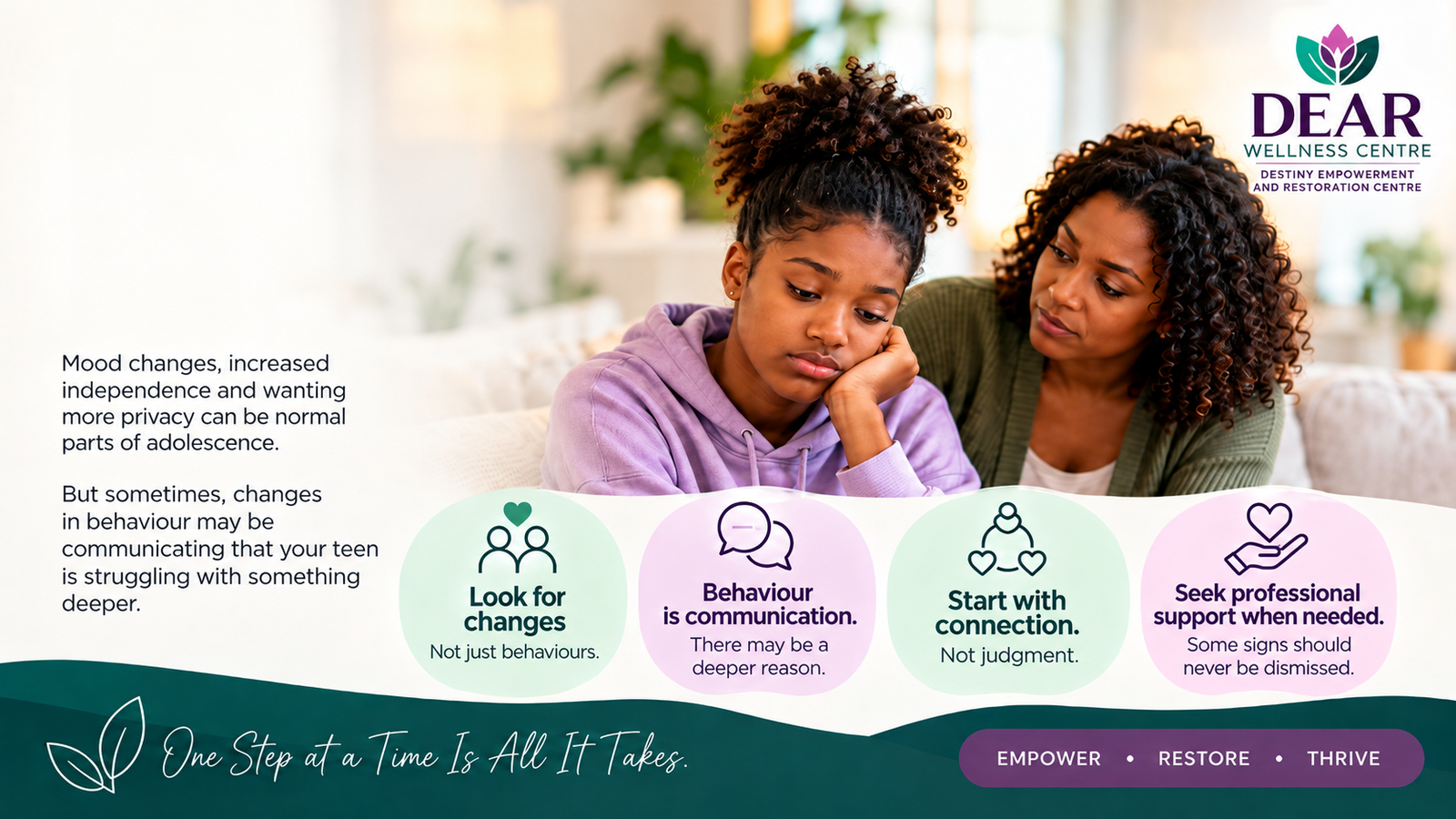
Adolescence is a period of significant change. Teenagers are developing their identities, becoming more independent, navigating friendships, managing academic expectations and learning how to handle increasingly complex emotions.
Because of this, mood changes, wanting more privacy, disagreements with parents and spending more time with friends can all be normal parts of growing up.
For parents, however, it can sometimes be difficult to know where normal adolescent development ends and emotional distress begins.
The question is not always simply, “Is this normal teenage behaviour?”
A more helpful question may be:
“Is this significantly different from my child’s usual behaviour?”
Look for Changes, Not Just Behaviours
One difficult day, an argument or a change in mood does not necessarily mean that something is seriously wrong.
Instead, pay attention to patterns and significant changes over time.
You may notice changes in:
- mood or temperament;
- friendships and social activities;
- school attendance or academic performance;
- sleeping or eating patterns;
- personal hygiene;
- activities they previously enjoyed;
- communication with family members;
- risk-taking behaviour; or
- willingness to participate in family life.
Several changes occurring together, particularly when they continue for a period of time, may suggest that your teen needs additional support.
Behaviour Is Often Communication
Teenagers do not always have the language, confidence or emotional awareness to explain what they are experiencing.
A teen who becomes angry, withdrawn or defiant may be struggling to say:
“I’m overwhelmed.”
“I’m being bullied.”
“I’m worried that I’m disappointing you.”
“I’m struggling at school.”
“Something happened and I don’t know how to tell you.”
Looking beyond the behaviour does not mean ignoring inappropriate conduct or removing necessary boundaries.
It means responding with both structure and curiosity.
You can hold a teenager accountable while still asking what may be contributing to the behaviour.
Start With Connection
Parents often begin difficult conversations because they are worried. Unfortunately, worry can sometimes sound like criticism.
Questions such as:
“What’s wrong with you?”
“Why are you behaving like this?”
or
“Why can’t you just tell me what’s going on?”
may unintentionally cause a teenager to become more defensive.
Instead, try:
“I’ve noticed you haven’t seemed like yourself lately. I’m not here to judge you. I just want to understand how you’re doing.”
Your teenager may not respond immediately.
That does not necessarily mean the conversation failed.
Knowing that a parent is emotionally available, calm and willing to listen can make it easier for a young person to speak when they are ready.
Listen Before Trying to Fix It
Parents naturally want to solve problems.
But sometimes teenagers first need to know that someone understands how the situation feels to them.
You can begin with statements such as:
- “That sounds really difficult.”
- “I can understand why you would feel upset.”
- “Thank you for telling me.”
- “What would feel most helpful from me right now?”
Listening does not mean agreeing with every decision your teenager makes.
It creates the emotional safety needed for guidance to become more effective.
Know When to Seek Additional Support
Some concerns deserve professional attention rather than being dismissed as a phase.
These may include persistent hopelessness, significant withdrawal, major changes in functioning, self-harm, suicidal statements, serious substance use or behaviour that creates immediate safety concerns.
Seeking counselling does not mean that a parent has failed.
Sometimes an adolescent needs a confidential and supportive space outside of the family to understand what they are experiencing and develop healthier ways of coping.
Supporting Your Teen Begins With Relationship
Parents do not need to have every answer.
Your teenager may remember your presence far longer than the perfect advice.
Stay curious. Keep communication open. Maintain appropriate boundaries. Notice changes. And when necessary, seek additional support.
🌸 DEAR Reflection
Am I responding only to my teenager’s behaviour, or am I also trying to understand what the behaviour might be communicating?