
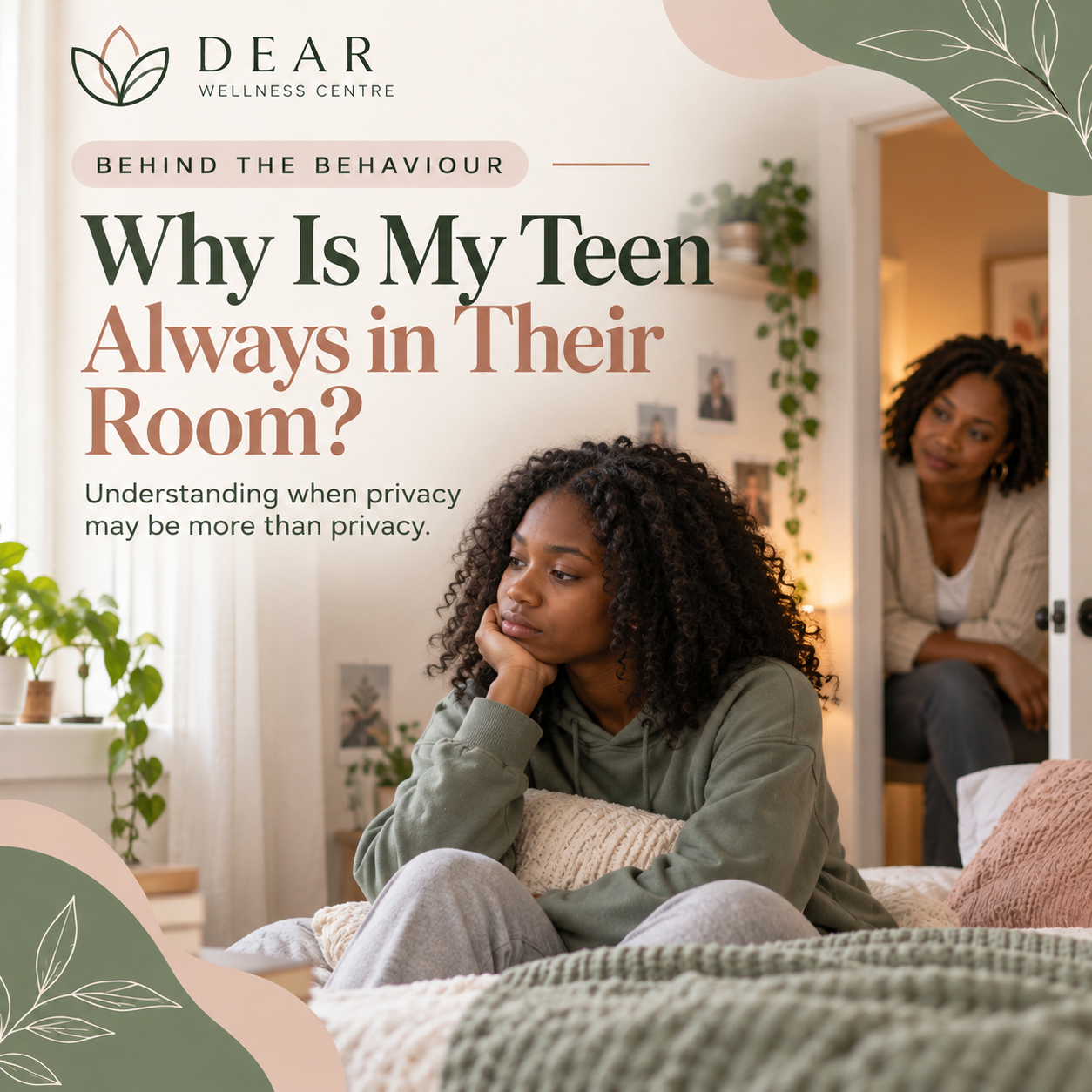
A closed bedroom door can become a source of tension in many families.
Parents may worry that their teen is becoming antisocial, hiding something or disconnecting from the family.
Teenagers, on the other hand, may simply feel that their room is the one place where they have privacy and control.
The important question is not:
“Is my teen spending time alone?”
It is:
“What is happening alongside the isolation?”
Privacy Is Part of Adolescence
As teenagers grow, they naturally seek more independence.
Their room may become a place to:
- decompress;
- talk with friends;
- listen to music;
- study;
- sleep;
- think;
- use social media; or
- simply enjoy being alone.
Privacy itself is not unhealthy.
The concern is when isolation becomes persistent and is accompanied by significant changes in mood or functioning.
Ask What Has Changed
Consider:
Is this new?
Are they still spending time with friends?
Are they attending school?
Are they eating normally?
Are they participating in activities they enjoy?
Are they functioning differently from before?
A teen who enjoys several hours alone but still maintains relationships and responsibilities may simply need more private time.
A teen who has withdrawn from nearly everything may require closer attention.
Withdrawal Can Have Many Meanings
A teen may spend more time alone because they are:
- tired;
- overwhelmed;
- introverted;
- studying;
- gaming;
- socialising online;
- avoiding family conflict;
- being bullied;
- anxious;
- depressed;
- grieving; or
- trying to cope with something they do not know how to discuss.
This is why context matters.
Don’t Turn the Bedroom Into a Battleground
Constantly demanding that a teenager leave their room can create a power struggle.
Instead of focusing only on where they are physically located, focus on connection.
Try:
“I haven’t seen much of you today. Come sit with me for a few minutes when you’re ready.”
Or create routine family connection through:
- shared meals;
- weekly outings;
- errands;
- walks;
- short check-ins;
- television time; or
- small household routines.
Connection can be brief and still meaningful.
Respect Privacy Without Disappearing
Giving teens privacy does not mean becoming uninvolved.
Parents still need to know:
- who their teen is spending time with;
- how they are functioning;
- whether they are safe;
- whether school attendance is stable;
- whether there are major changes in behaviour; and
- whether there are signs of emotional distress.
Healthy parenting during adolescence involves gradually increasing independence while maintaining appropriate supervision.
Watch for Warning Signs
Withdrawal deserves more attention if it is combined with:
- persistent sadness;
- hopelessness;
- self-harm;
- suicidal comments;
- major sleep disruption;
- school refusal;
- sudden friendship loss;
- significant weight or appetite changes;
- substance use; or
- loss of interest in almost everything.
These signs should not be dismissed simply as a teen wanting privacy.
Connection Does Not Always Require Conversation
Sometimes parents assume that quality time must involve a serious discussion.
It does not.
Sitting together quietly can matter.
Driving somewhere can matter.
Sharing food can matter.
Watching a show can matter.
Small moments of connection help maintain the relationship so that deeper conversations have somewhere to begin.
Behind the Behaviour
Instead of asking only:
“Why are you always in your room?”
consider:
“What is my teen getting from being alone right now?”
The answer may be independence.
It may be rest.
It may be avoidance.
It may be emotional protection.
Curiosity helps parents distinguish between normal privacy and meaningful withdrawal.
🌸 DEAR Reflection
Am I respecting my teen’s need for privacy while still staying emotionally connected and observant?
Leave Your Comment