
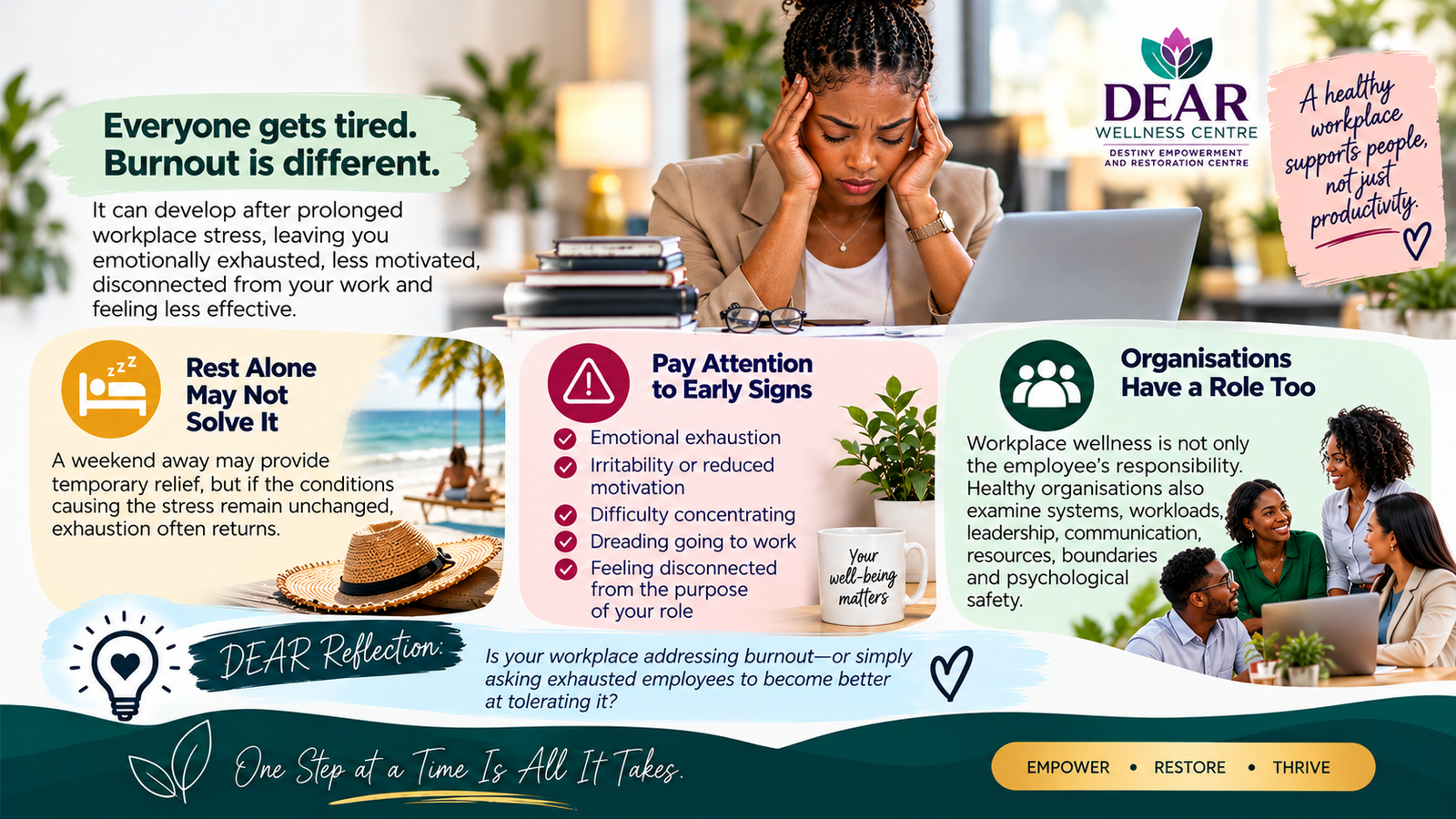
Everyone gets tired.
After a demanding week, a busy period or several nights of poor sleep, most people will feel physically and mentally drained.
Rest may help.
Burnout is different.
Burnout can develop following prolonged workplace stress and may involve emotional exhaustion, increasing distance or negativity toward work and a reduced sense of professional effectiveness.
It is more than simply needing a weekend off.
Burnout Can Develop Gradually
Burnout does not always begin with a dramatic breakdown.
It may develop slowly.
At first, you may notice that you are more tired than usual.
Then you begin feeling irritable.
Motivation decreases.
Tasks that once felt manageable start feeling difficult.
You may dread going to work or find yourself emotionally distancing from colleagues, clients or the purpose that originally attracted you to your profession.
Because these changes develop gradually, people sometimes normalise them.
They tell themselves:
“I’m just tired.”
“Things will settle down soon.”
“I just need to push through.”
Sometimes they do.
Sometimes the stress remains.
Rest Alone May Not Solve Burnout
A weekend away, vacation or self-care activity may provide temporary relief.
But if the conditions producing chronic stress remain unchanged, exhaustion often returns.
This is why burnout cannot always be addressed by telling an exhausted employee to “rest more.”
The wider environment may also need attention.
Factors may include:
- excessive workload;
- unclear expectations;
- insufficient resources;
- difficult workplace relationships;
- poor boundaries;
- lack of recognition;
- limited autonomy;
- inadequate staffing;
- inconsistent leadership; or
- low psychological safety.
Individual coping strategies matter, but they cannot compensate indefinitely for unhealthy systems.
Pay Attention to Early Signs
Possible signs of burnout may include:
- emotional exhaustion;
- irritability;
- reduced motivation;
- difficulty concentrating;
- increased cynicism;
- dread about going to work;
- reduced sense of accomplishment;
- feeling detached from colleagues or clients;
- difficulty switching off after work; and
- feeling disconnected from the purpose of your role.
Recognising these signs early creates an opportunity to respond before exhaustion becomes more severe.
What Can Individuals Do?
Personal strategies can still be helpful.
Consider whether you need to:
- reassess your boundaries;
- take available leave;
- seek supervision or support;
- discuss workload concerns;
- reduce unnecessary commitments;
- improve recovery time outside work;
- reconnect with supportive relationships; or
- seek professional help if stress is significantly affecting your wellbeing.
The goal is not to become better at tolerating unhealthy conditions.
The goal is to identify what can realistically change.
Organisations Have a Role Too
Workplace wellness cannot consist solely of encouraging employees to meditate, exercise or practise self-care.
Those things can be helpful.
But healthy organisations also examine their systems.
Leadership should consider:
Are workloads reasonable?
Are expectations clear?
Do employees feel safe raising concerns?
Are staff adequately supported?
Is communication effective?
Are people recognised for their contributions?
Are boundaries between work and personal life respected?
Are employees continually being asked to do more with fewer resources?
These questions move workplace wellness beyond individual responsibility.
Wellness Is a Shared Responsibility
Employees have a role in protecting their wellbeing.
Organisations also have a responsibility to create environments in which people can reasonably function without chronic, unmanaged stress.
The strongest workplace wellness strategies address both.
🌸 DEAR Reflection
Is your workplace addressing burnout—or simply asking exhausted employees to become better at tolerating it?
Leave Your Comment